

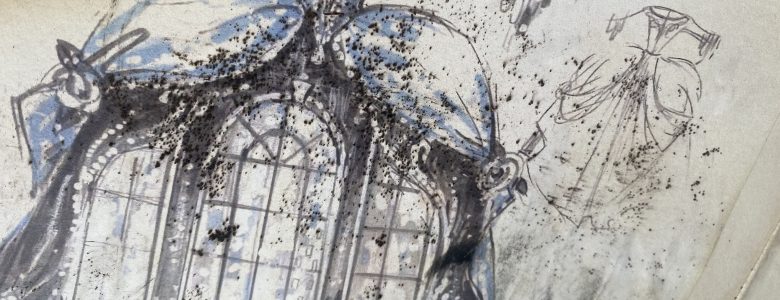
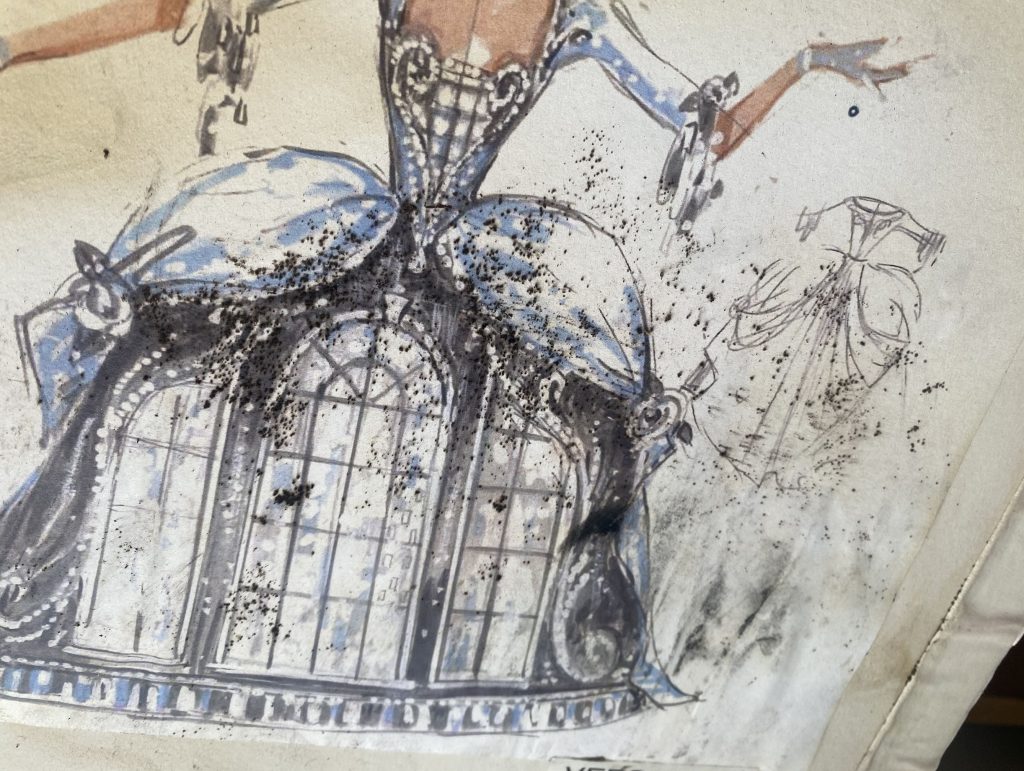
Working in an archive, you are bound to come across mold at some point. We want to ensure that mold does not cause health hazards for future researchers viewing the materials, and ensure that it does not spread to other materials in the collection.
When mold is brought to our attention, we immediately isolate the material and place it in vapor sealed (Ziplock) bags. These bags are then placed into a frost-free freezer for at least 3 weeks. We freeze the mold to deactivate it. This will not destroy it, but it will make it much easier to clean and hopefully keep it dormant. After this time, the bag is removed from the freezer and placed into an acclimation chamber (a cooler) where it’s temperature is brought back to room temperature overnight to help prevent condensation buildup. Then cleaning can begin.
When dealing with mold, safety is always the first priority. Mold can cause significant health problems, and we want to ensure anyone working with or around mold is protected. Anyone dealing with mold should be wearing full PPE (Nitrile gloves, N95 mask, goggles, and an apron).
Utilizing a variable suction HEPA vacuum, we place the item under our vent hood and slowly vacuum the entirety of the item with a soft bristled nozzle. If the item is particularly fragile or is a photograph, we place a piece of mesh screen over the item to keep it from getting damaged. After the item is cleaned, we will create an enclosure for it (i.e. phase box, four flap, or encapsulation) with the hope that if the mold ever does reactivate it will be contained to its enclosure.
There are times, however, when the mold is too extensive and dangerous for us to mitigate and clean. To ensure the content of the item survives, we digitize the item, upload it to The Portal to Texas History, deaccession and discard it.
Leave a Reply