

Why Do Paper Repair?
There are three key benefits to mending torn documents and prints.
The first, and perhaps most important from a preservationist’s perspective, is preventing future damage. If paper is torn, then it is only easier to tear it more when handling, even if one is to handle it carefully. Through paper mending, these weak points are reinforced and future damage is halted.
Second, paper mending can improve an item’s practical accessibility. As previously mentioned, one must exercise caution when handling a torn piece of paper, especially if it is embrittled. This often discourages or prevents entirely the handling of these fragile items. Upon mending tears and holes in a piece of paper, it can be picked up and examined closer without fear of causing harm to it. Always exercise caution, of course.
Finally, paper repair can improve the aesthetic presentation of a print or document. If one looks at a beautiful image with a rip through it, one is likely to shift their focus rather fast to the fact that the print is damaged. Paper mending, when done right, minimizes the appearance of tears to the point of their imperceptibility (when observed on the opposite side of the mending).
Guarding with Heat Set Tissue
Guarding is a simple, quick method of paper repair that involves adhering heat set tissue paper to damaged areas of paper. This process of adhering the tissue is done with an iron at around 300 degrees Fahrenheit, and heat can also be used to remove heat set tissue paper if an item needs to be returned to its original state.
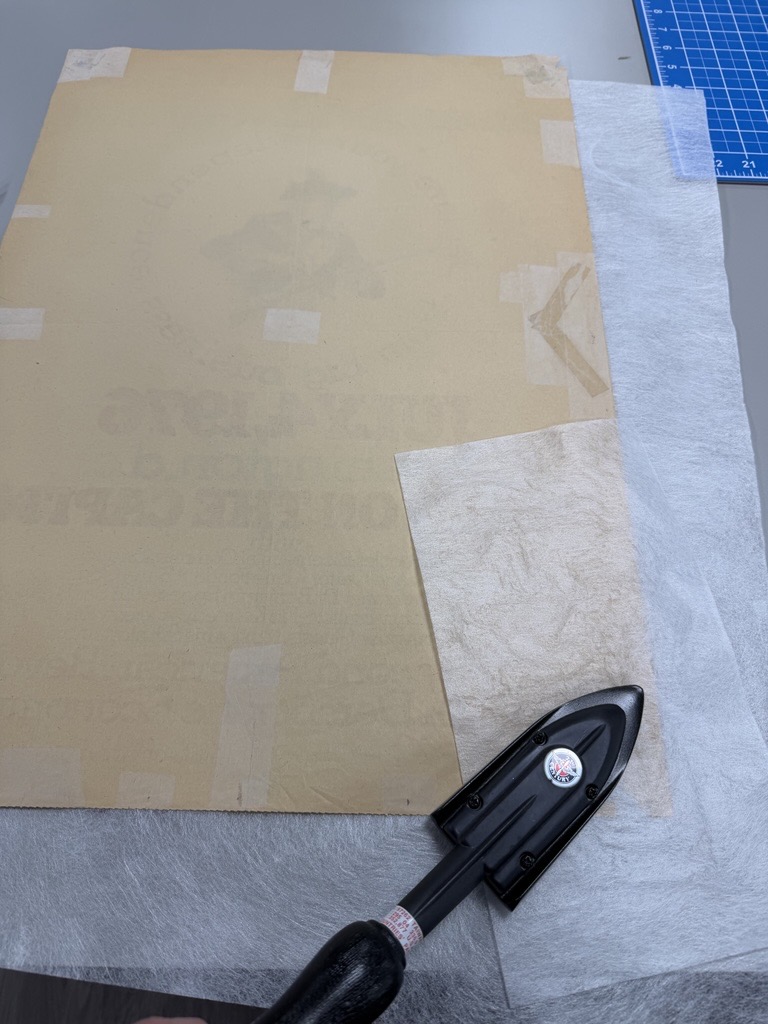
The simplicity of heat set tissue paper mending is somewhat evident through its appearance. It typically is a translucent, almost-white color, so it rarely blends nicely with prints that have stood the test of time. Furthermore, it can often loosen through handling, especially if not allowed to rest after its initial application. This can make it somewhat finicky and untrustworthy.

Japanese Tissue Paper Mending
If a print is mended with Japanese tissue paper, it has “made it big.” This time-consuming, but rewarding, process entails tearing strips of Japanese tissue paper and applying them along tears or holes. The tissue is applied using a preservation-friendly reversible adhesive, we at Special Collections opt. for methyl cellulose. It is reversible, a little goes a long way, and it dries clear!
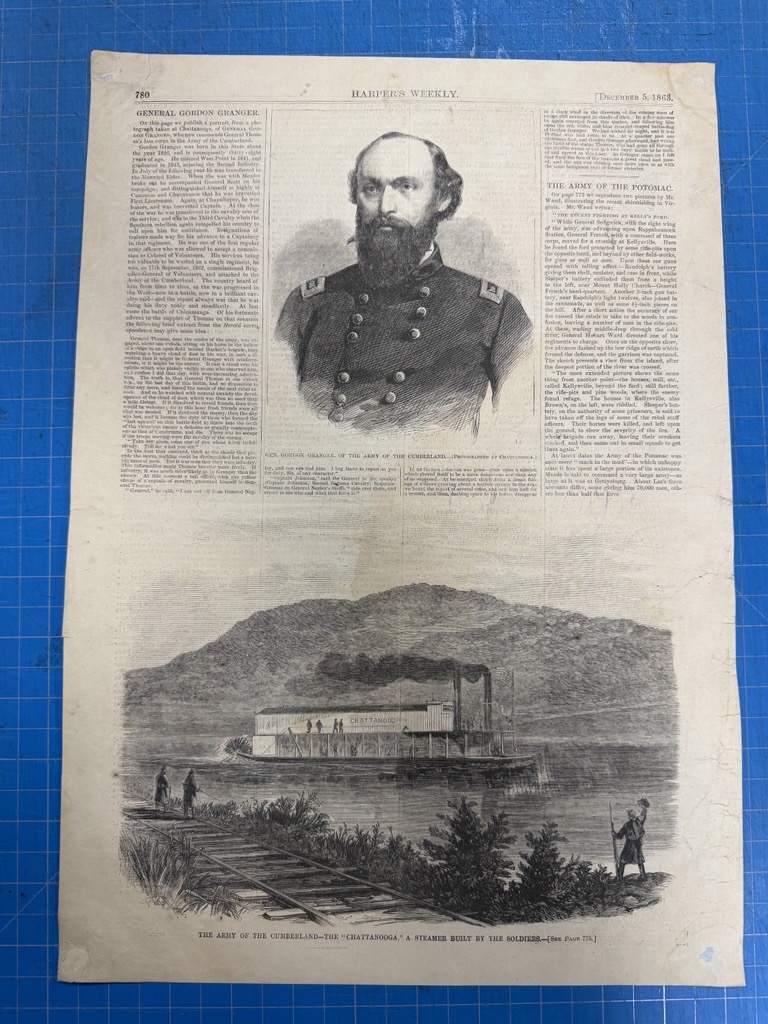
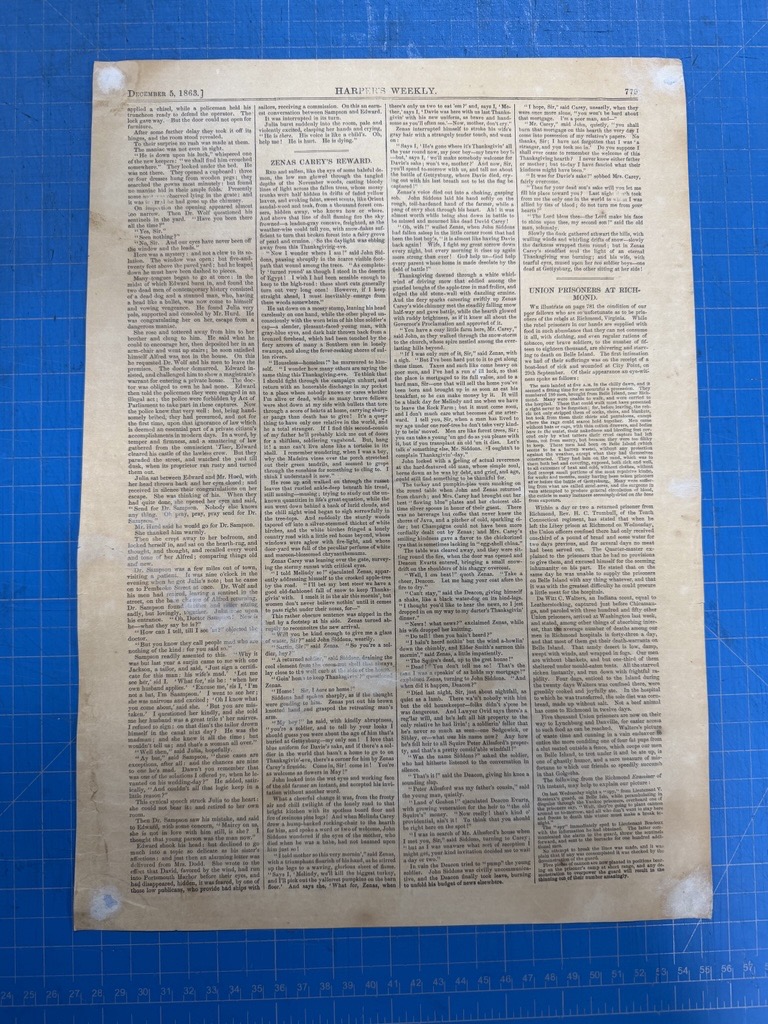
Japanese tissue paper can have very loose fibers. When torn, the frayed edges “melt” into the paper being mended, creating an almost-seamless result. Because of its malleable property, it can be layered to give more reinforcement to areas that need it.
Like heat set tissue paper, Japanese tissue paper also is off-white in appearance, typically contrasting itself from the paper being repaired. Luckily, depending on the thickness used, it can often be translucent enough to be applied over text without affecting legibility. Small, precisely torn pieces also minimize the appearance of the tissue used.
Who Wins?
On paper, no pun intended, Japanese tissue paper mending seems like the clear winner. It can be used precisely to reinforce almost any hole or tear, it blends nicely into surrounding paper, and it can be layered upon to provide varying levels of reinforcement.
Guarding damaged paper with heat set tissue certainly does not have the “oomph” that Japanese tissue paper provides. It does not look as good, nor does it have the same level of strength. Nonetheless, a paper with multiple tears could be repaired with heat set tissue in 30 minutes at most while, on the other hand, the same repairs would likely take twice the time or more with Japanese tissue paper.
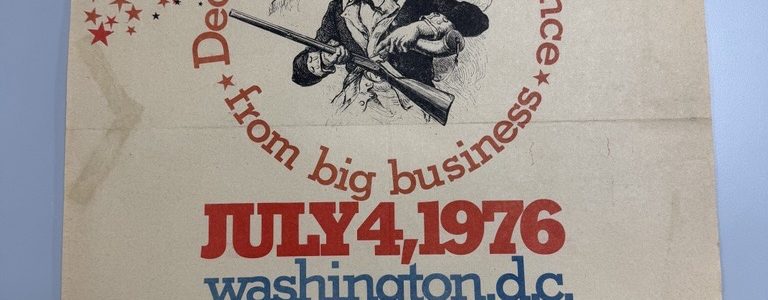
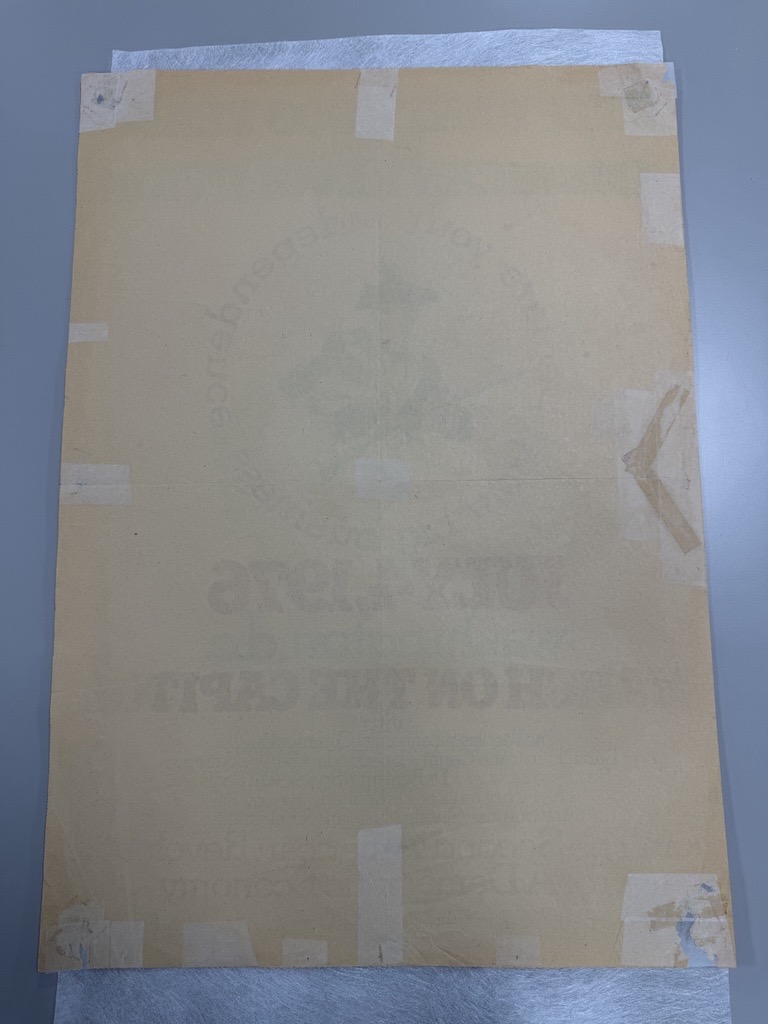
As always, the true answer is, “It Depends.” I opted for heat set tissue repairs on the poster because it is large, has several spots of damage, the backside of the poster is blank, and it is a duplicate. The other matching poster was scanned and encapsulated. In this instance, the guarding was only done for the purpose of preventing future damage. The Harper’s Weekly page got the Japanese tissue paper treatment due to it having content on both sides, having long tears and areas that needed more reinforcement than others, and it lacks a duplicate.
Leave a Reply