

Out of the various enclosure types we build here at Special Collections, the clamshell is the most time-consuming. It is therefore also selected rather sparingly. Traditionally, we use it for books of high value that warrant a visually-appealing enclosure. Although it is very protective, it is just slightly more protective than a heavyweight phasebox. For context, it takes about 30 minutes to build a heavyweight phasebox. It takes about 5 hours, uninterrupted, to make a clamshell.
In late-July/early-August, I was tasked with making three clamshells. Now, at the end of August, I can say that I have made six. That is a lot of clamshells! Did I have to? No. Nonetheless, this month in the Preservation Lab I have had several marvelous artists’ books and an artbook land on my shelf, and I couldn’t pass up this opportunity to spend a whole week making clamshells.
Pssst… pssst… I also couldn’t pass up this opportunity to explain the difference between artists’ books and artbooks. An artists’ book is a book that is a piece of art while an artbook is a printed selection of an artist’s works. Took me a while to know which one was which. It kinda sounds like it should be the other way around…
Mexican Punitive Expedition diaries by George Burt Lake
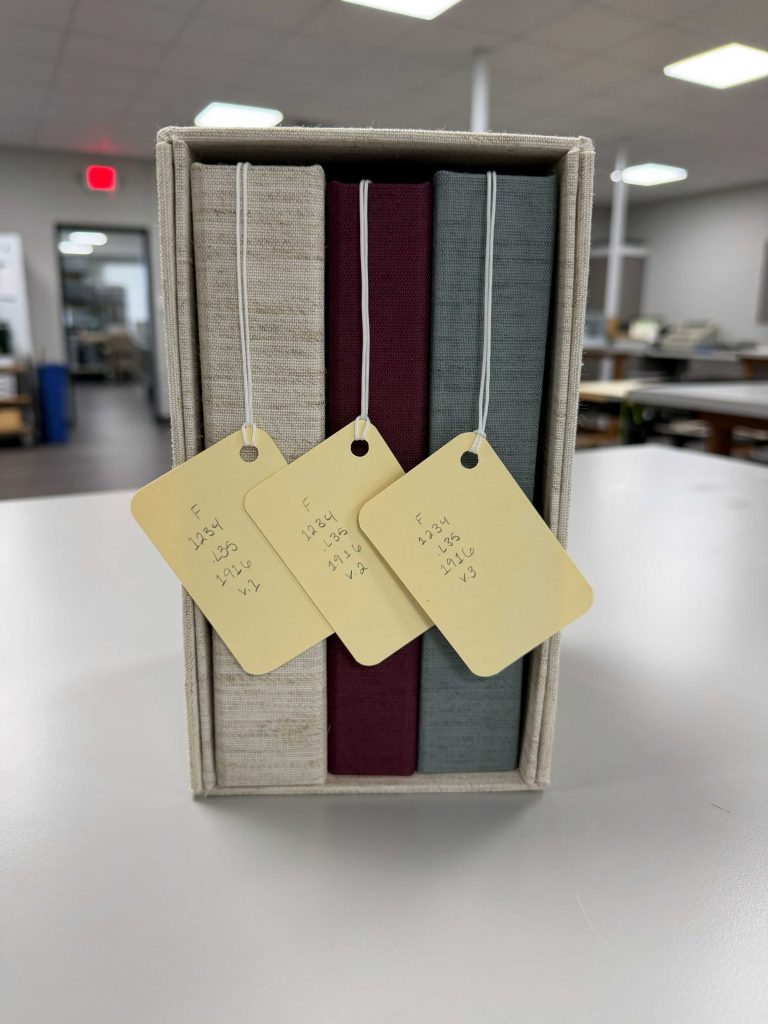

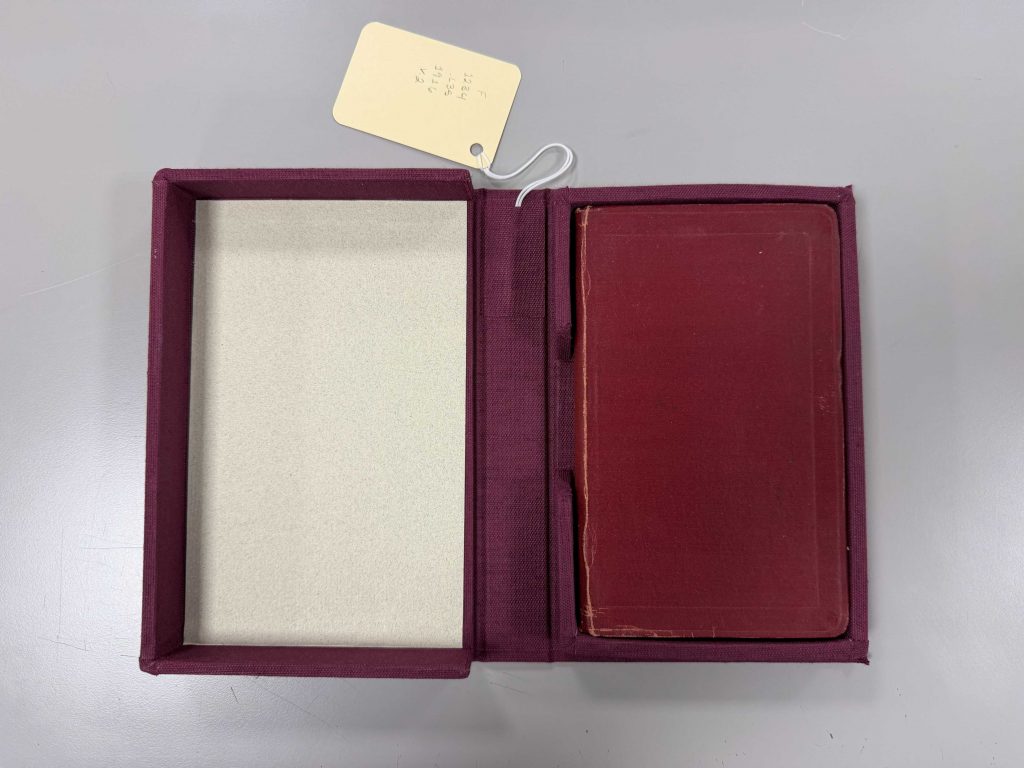
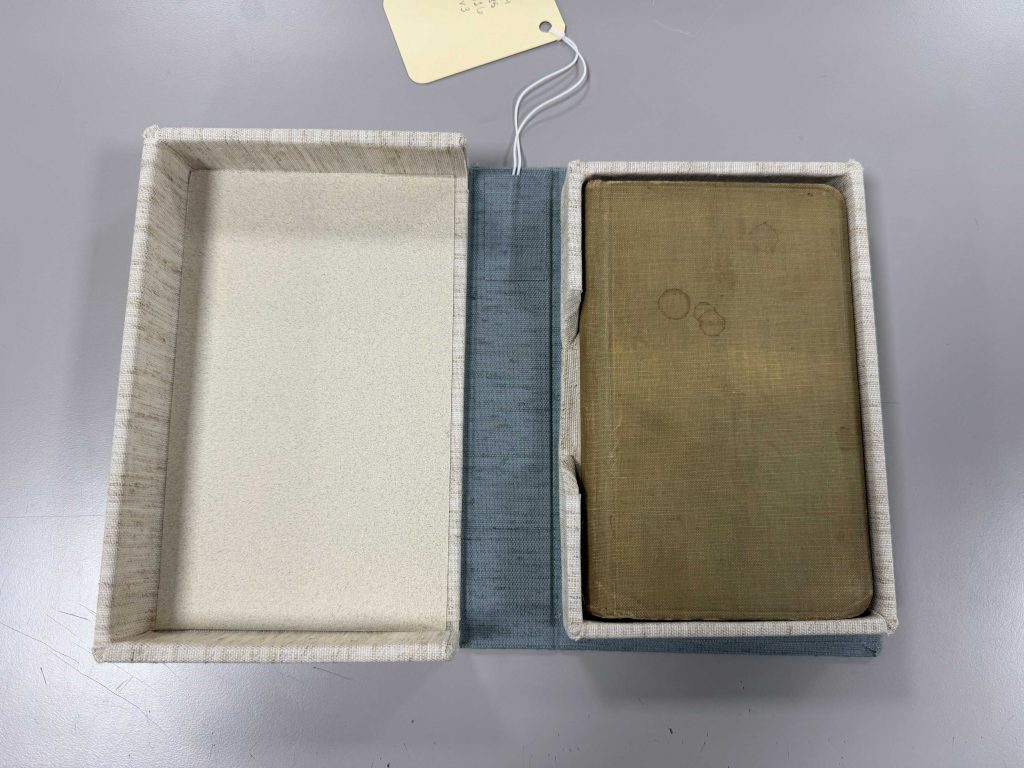
Here are three clamshells made by my talented preservation assistant, Natalie, and myself. The clamshells contain a three volume series of diaries written by George Burt Lake during the Mexican Punitive Expedition (a.k.a. the Pancho Villa Expedition or the Mexican Expedition). The goal of this almost year long expedition spanning from March 1916 to February 1917 was to capture the Mexican revolutionary Francisco “Pancho” Villa in retaliation for a previous attack on Columbus, New Mexico led by his revolutionary forces.
I had three main considerations for the creation of these three clamshells. The three clamshells had to be somewhat reminiscent of the book’s colors, the first volume had to have additional protection due to it coming unbound and having red rot, and, since the books will all live aside one another, I wanted to create a slipcase for them to live in.
Rather than following instructions for the creation of a slipcase, I figured, “Well, I know what a slip case looks like! I can just make one.” Was that true? Somewhat. Was it the best choice? Certainly not. While the slipcase works, the processes of lining it with fabric and finding the accurate dimensions for the inside space had too much trial and error for my taste. If you look at the sides of the case, you can see that I had to add in additional boards to take up more space.
Next time, I will be following instructions for creating a slipcase, and I will also ensure that all clamshells in the slipcase will have the same exterior dimensions so they all fill the space equally. Despite difficulties in this process, this sparked some desire to continue making clamshells.
Lucky for me, two weeks later we received a large order of artists’ books from Passages Bookshop, and all of them needed enclosures…
Artists’ Books Clamshells
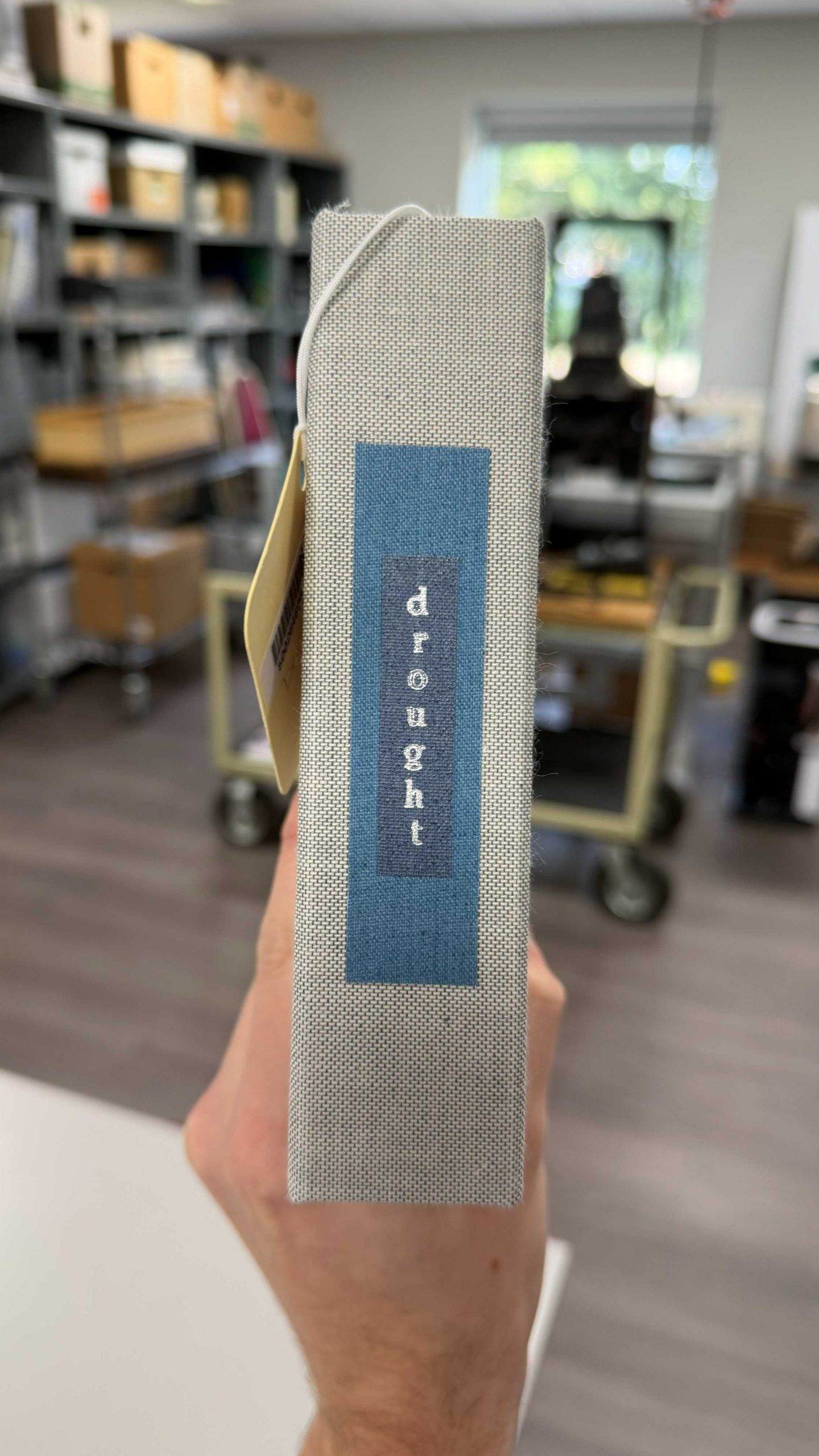
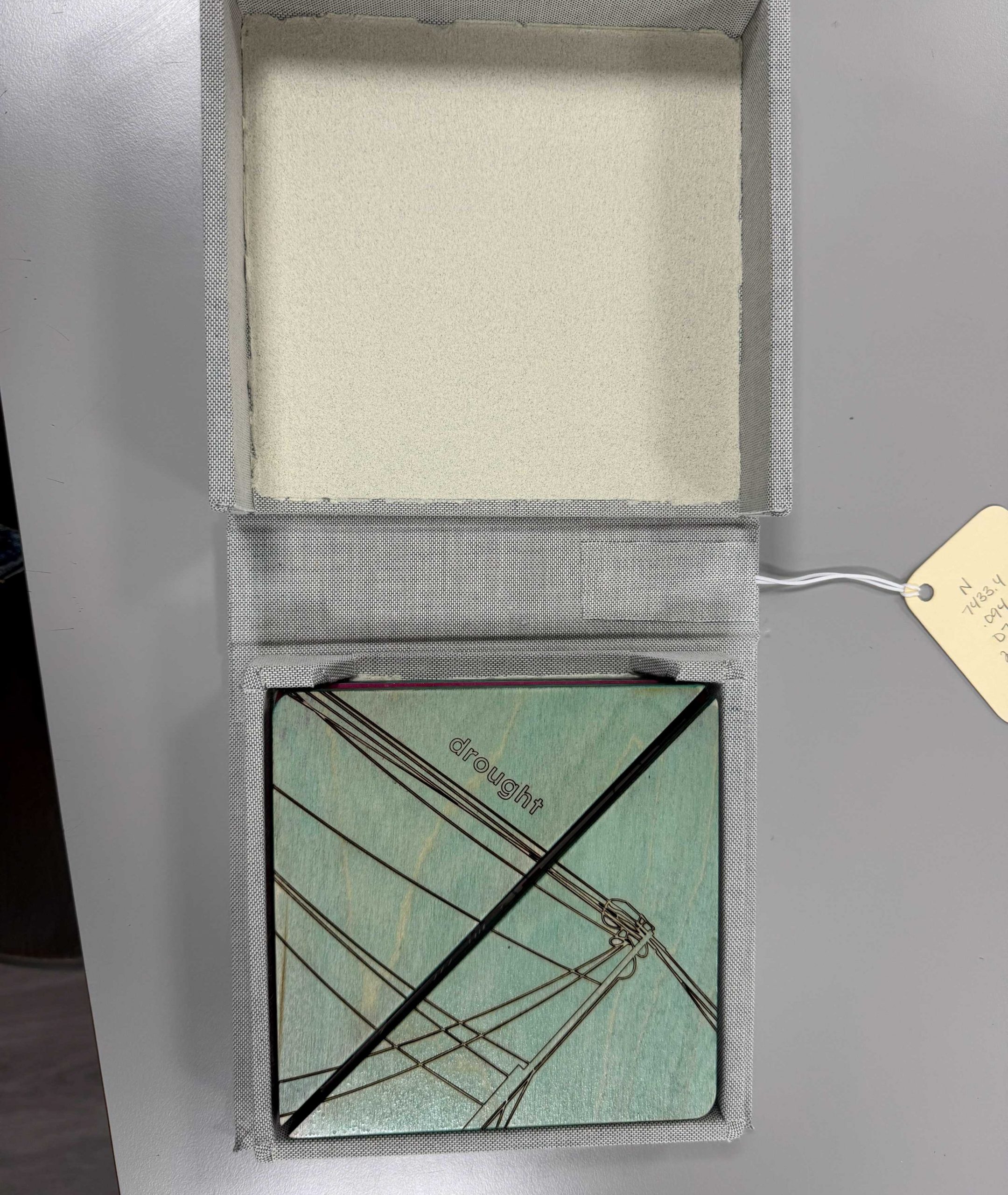
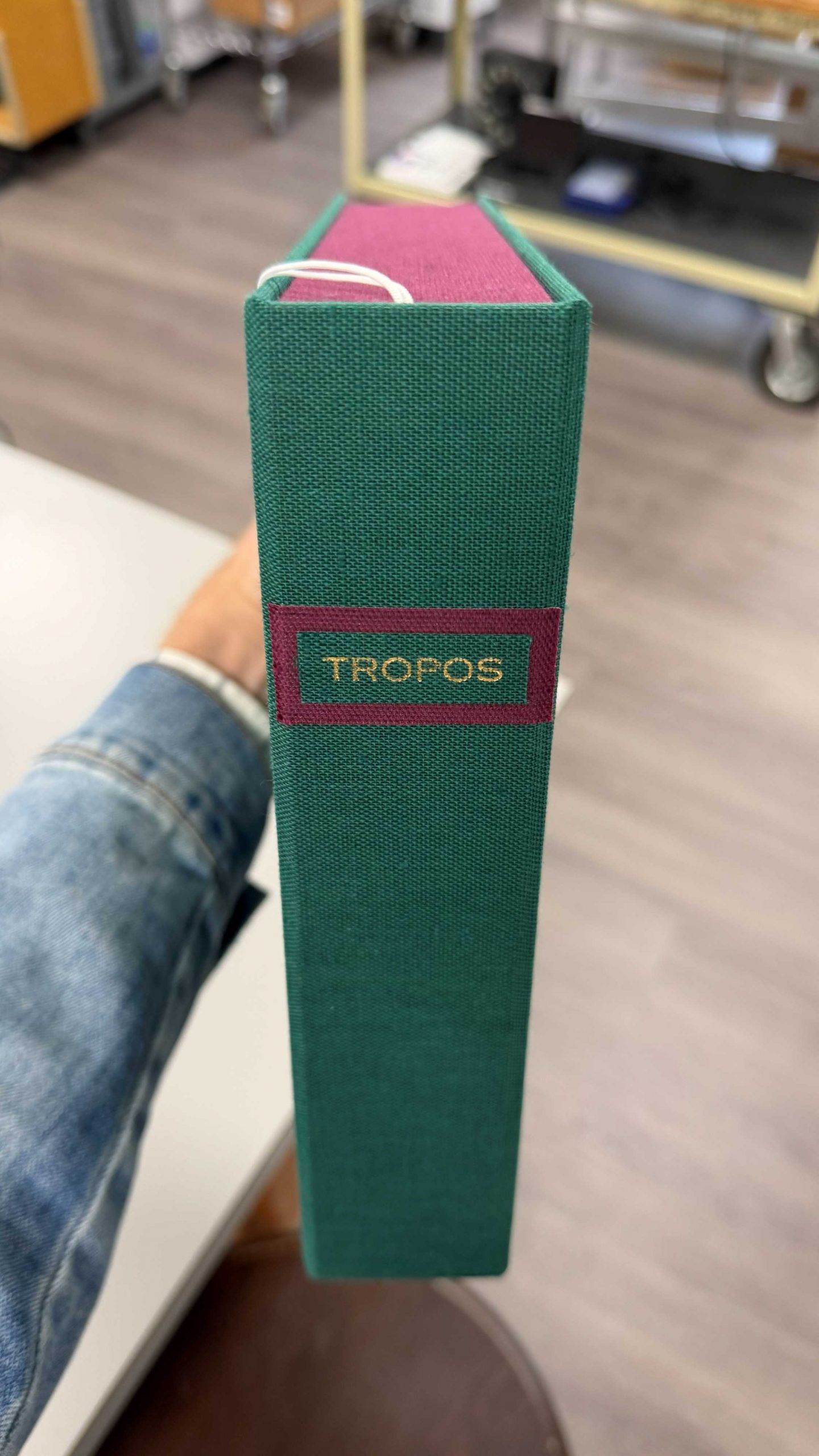
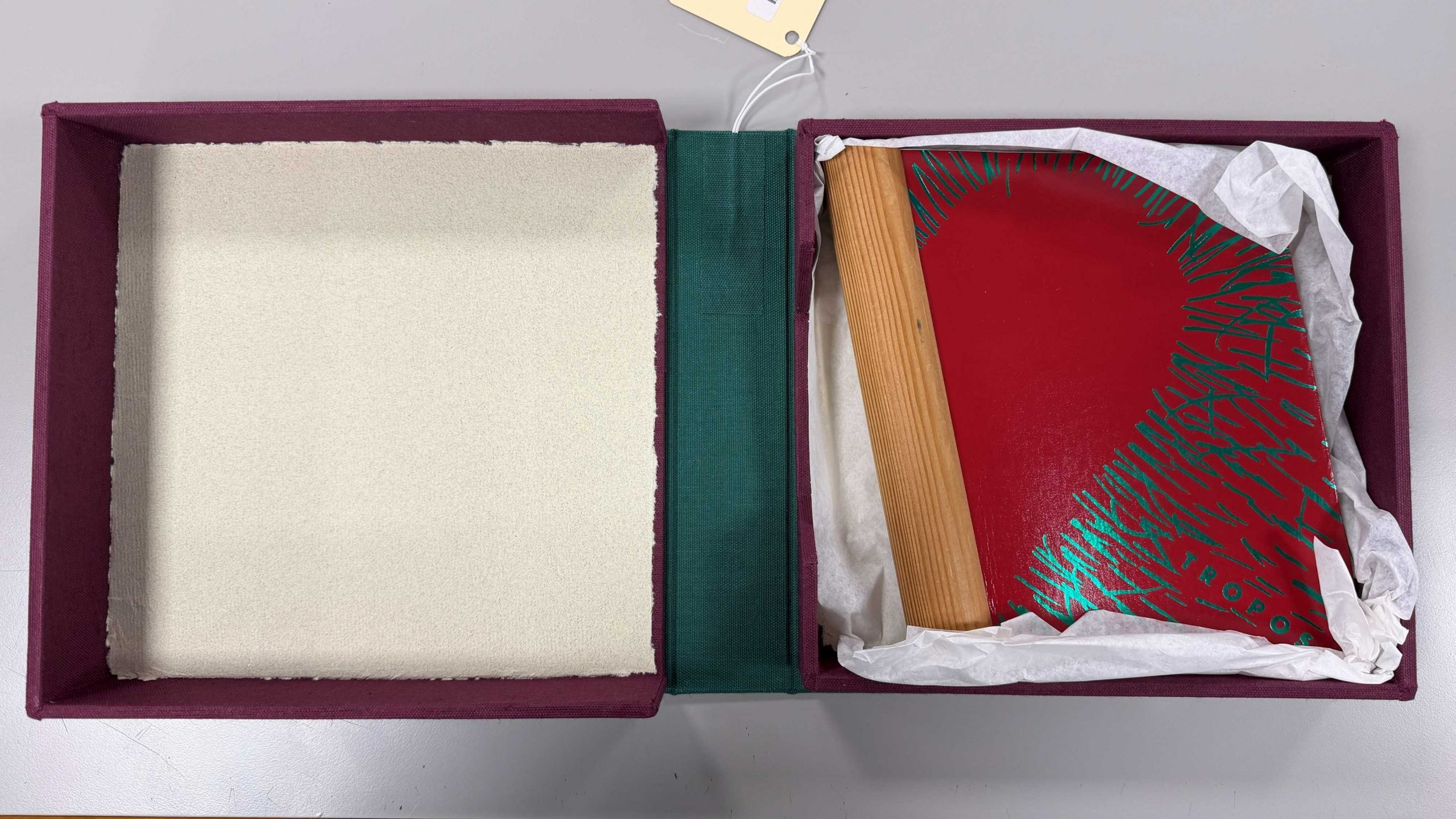
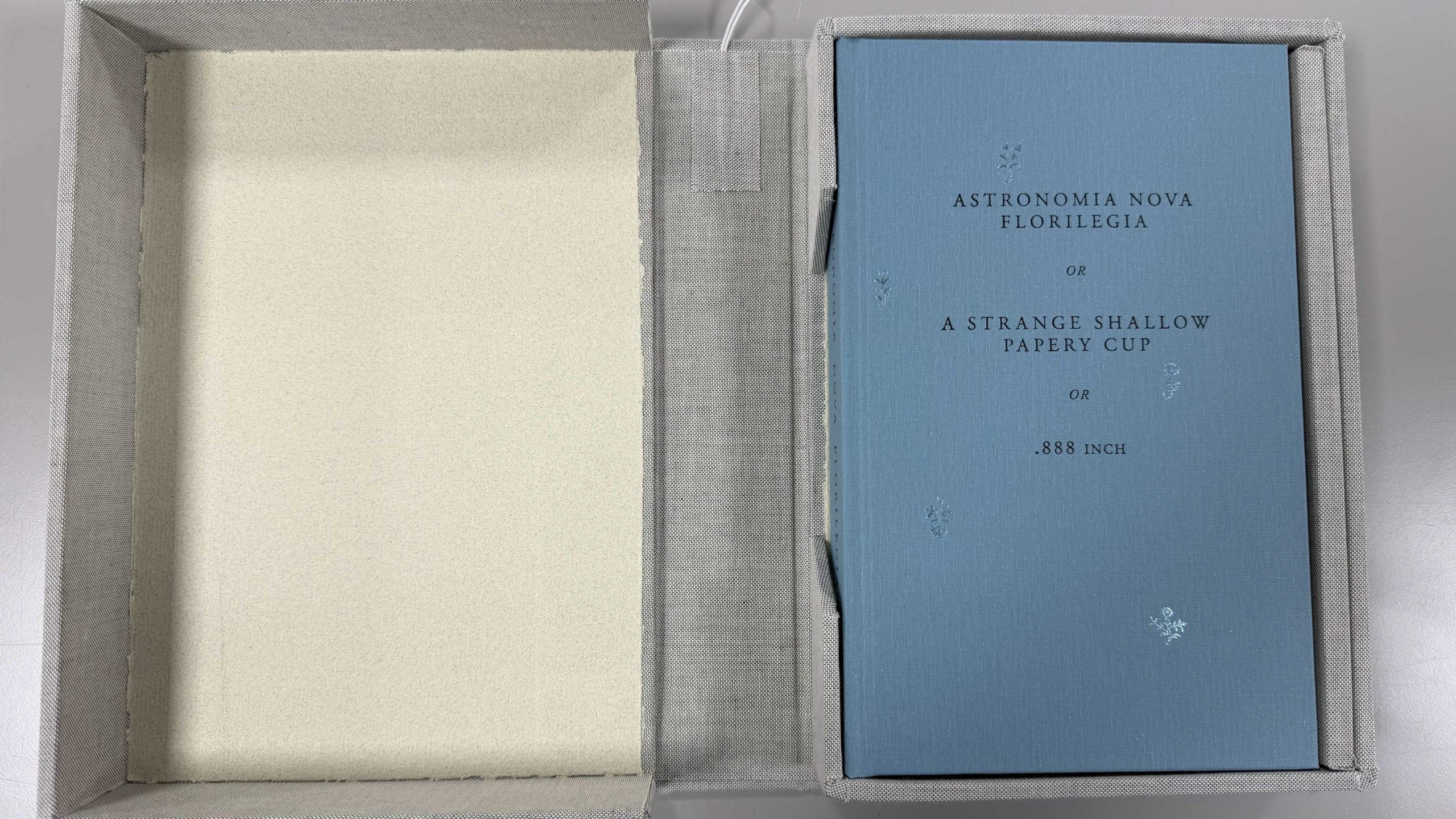
As you can see, these books vary quite drastically in shape, size, and materials used for their construction. The book on the bottom right is a classic hardcover book, while the other two books have unique wooden cover material. Not to mention, one of them is not rectangular!
All but one of these clamshells were created without issue. If you look to the right side of the last clamshell, you can see that I added in two additional pieces of board to take up excess space. Nonetheless, I think it still turned out quite nice.
Furthermore, I have recently gotten quite obsessed with creating custom labels for our clamshells. This process entails using our foil letterpress machine to press hot metal letters onto a piece of metallic foil. The combination of the foil with pressure and heat transfers the letters onto the material. This takes some trial and error. I typically print the same thing a few times on a single sheet of book cloth or buckram before deciding which one looks best. After that, I cut out the winner and create a border around it.
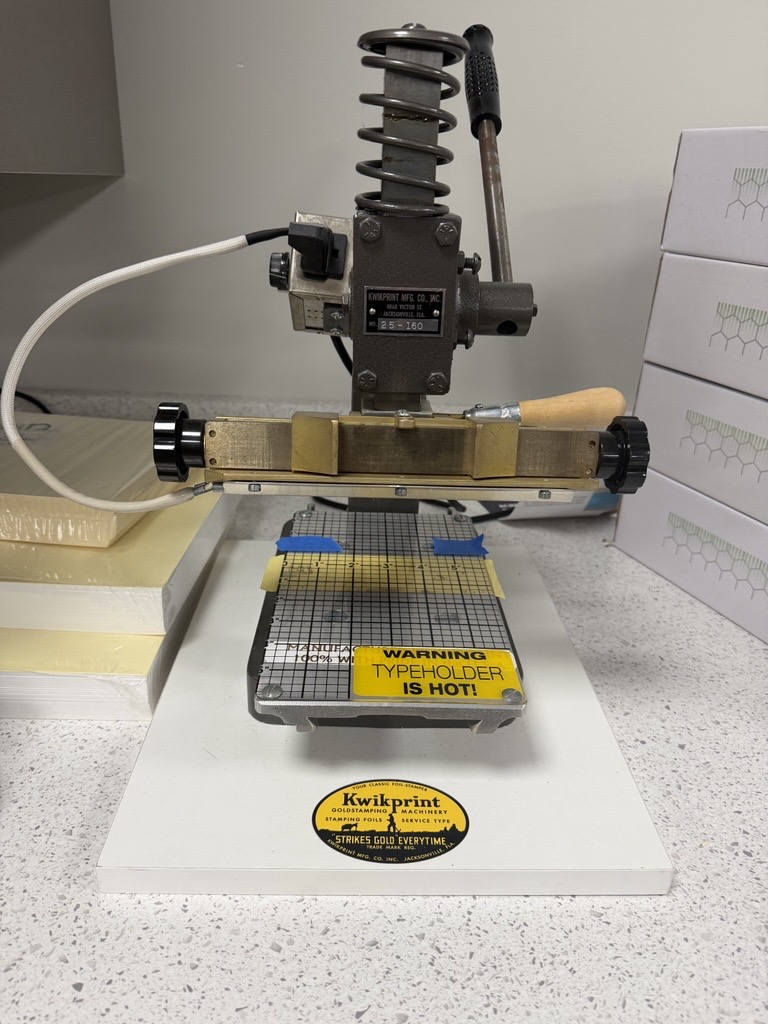
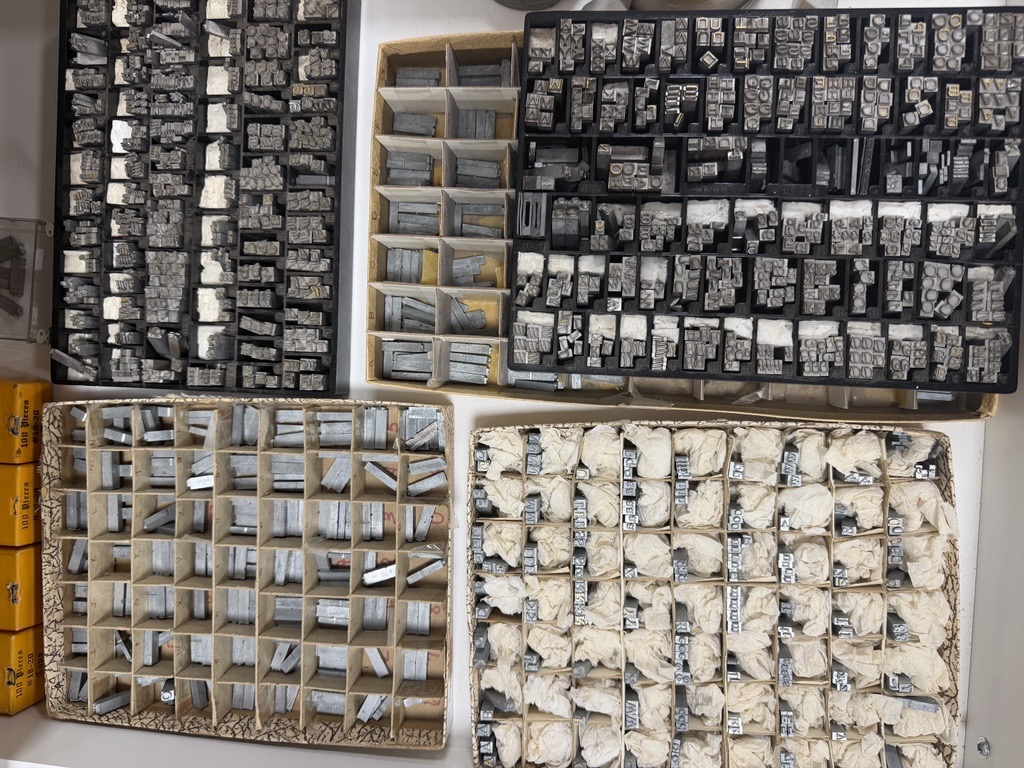
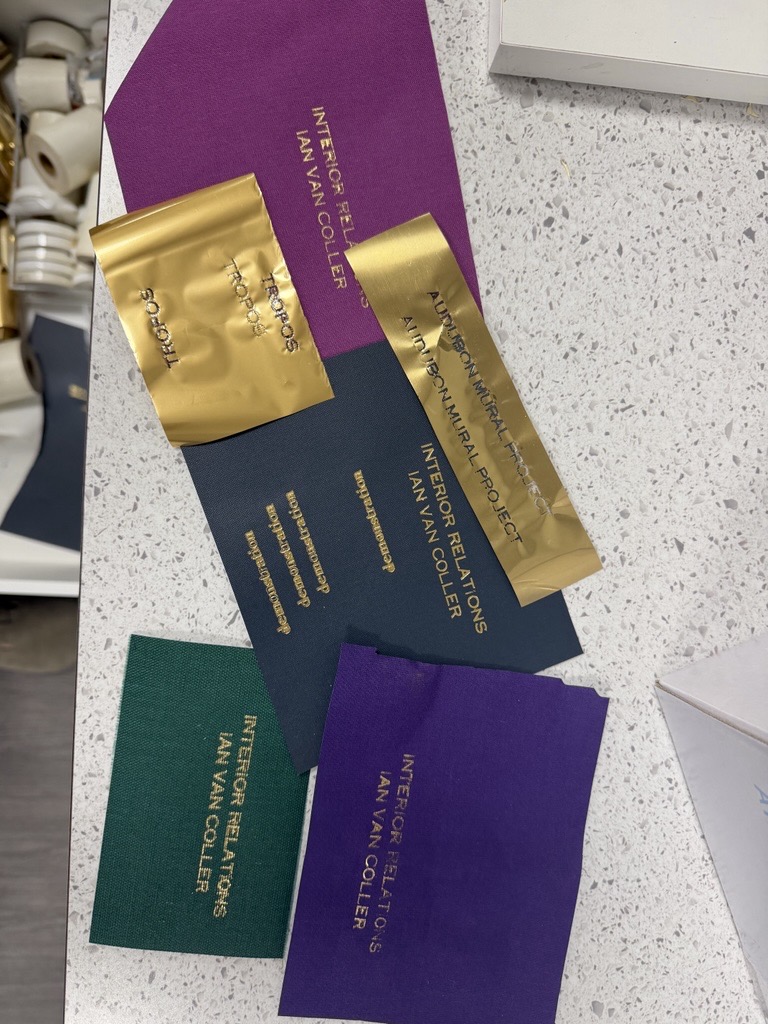
Large Artbook Clamshell
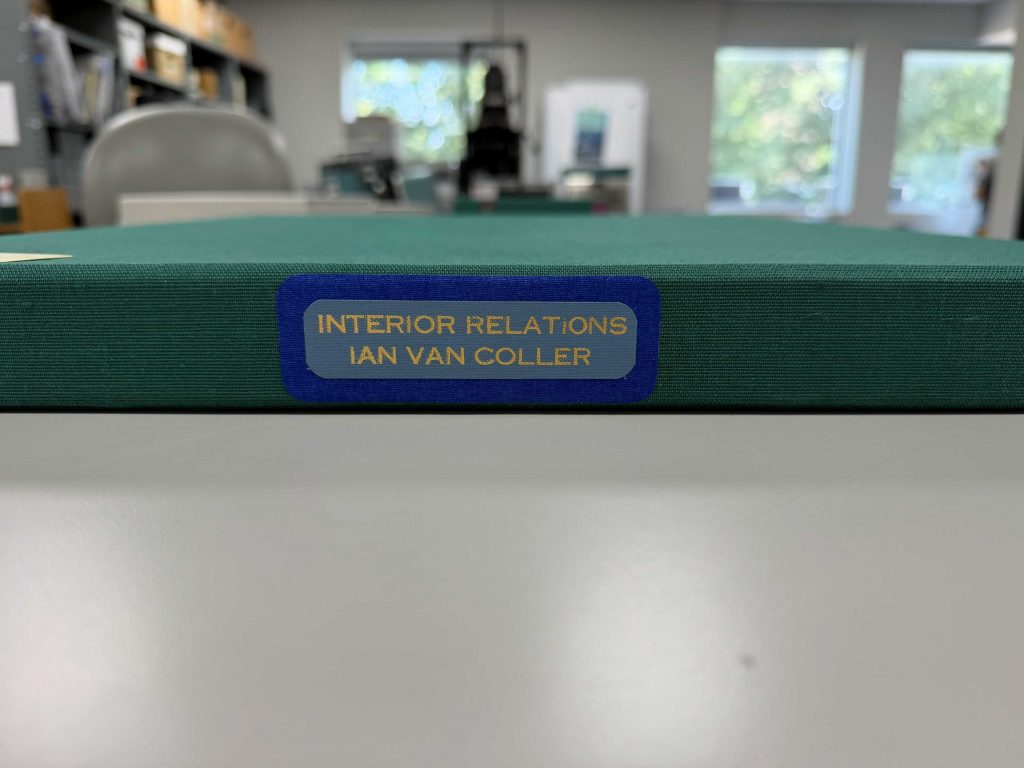
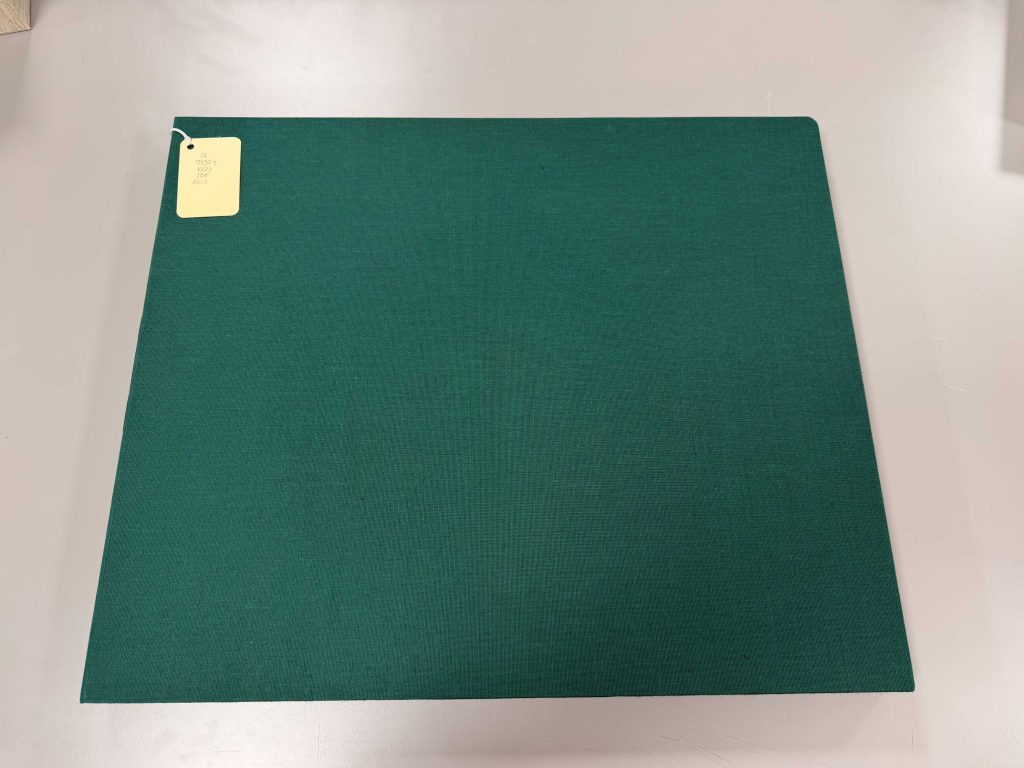
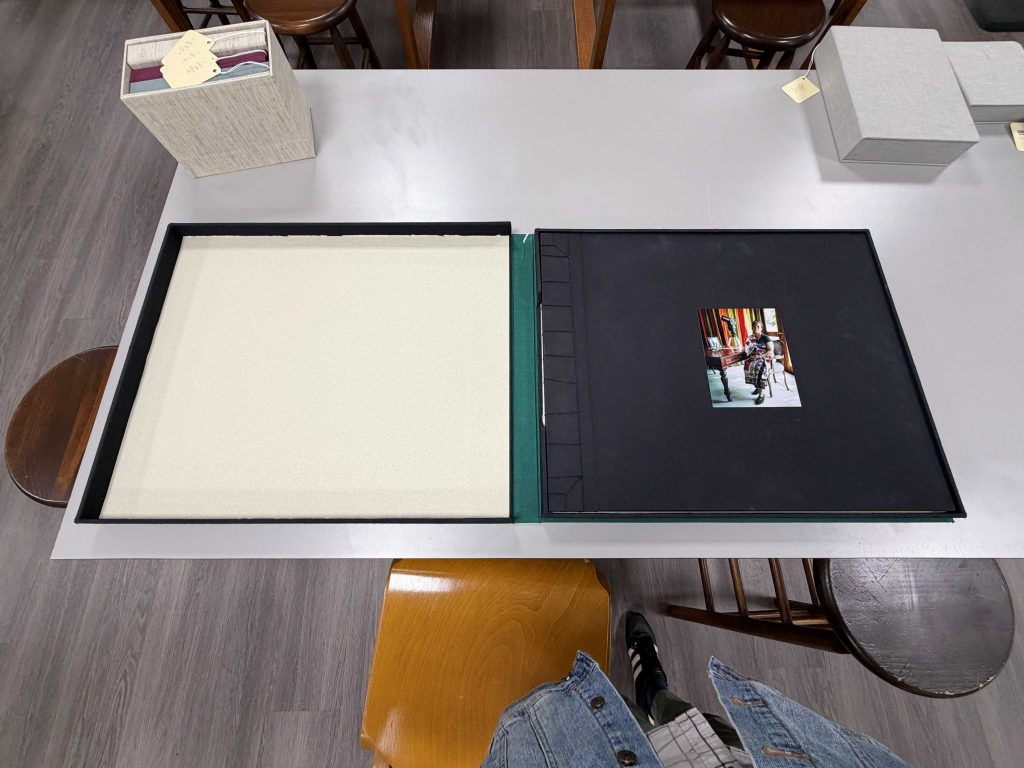
Finally, to end this saga of rapid clamshell creation, I made an oversized clamshell for a book of photography by Ian van Coller titled Interior Relations. Both miniature and large items alike generate similar levels of increased difficulty when building preservation enclosures. Special considerations must be made, and measurements become much harder to accurately take. It is also quite hard to cut either miniature or large pieces of binders board. It is a Goldilocks situation, a regular-sized book is just right.
Perhaps due to the increased attention I had to pay to making my measurements and cuts, this clamshell ended up fitting the book perfectly. It was, well, just right.
Where can I access these books?
These books, and their clamshells, are all part of UNT’s Special Collections and can be made available by appointment to access at the Sarah T. Hughes Reading Room on the fourth floor of Willis Library. Below, I have provided the links to them through the UNT Discover catalog:
Lake, George Burt, Mexican Expedition
Overturf, Edie, Drought
Osborn, Kevin, Tropos
Ancliffe, Abra, Astronomia nova florilegia, or A strange shallow papery cup, or.888 inch
Van Coller, Ian, Interior Relations
Leave a Reply